
The Office Fruit Delivery Case Study: Boosting London Workplaces
Three months ago, a London fintech company with 87 staff approached me with a familiar problem. Morale was sliding, energy levels were terrible, and the office kitchen had become a graveyard of empty crisp packets and chocolate wrappers. Now this isn’t exclusively a good issue (I helped with some other wellness aspects) but the operations director specifically wanted to try something different in the food department but needed evidence it would actually work before committing meaningful budget.
They agreed to an office fruit delivery through Fruitful Office, tracking specific metrics before and after implementation. The test ran for three months, the results were… surprising.
The starting point
The company occupied two floors in Shoreditch, typical startup environment with ping pong tables nobody used and a snack cupboard stocked with processed rubbish. Staff worked long hours, deadlines were relentless, and the afternoon slump was so pronounced that meetings scheduled after 3pm were basically pointless.
I ran a baseline survey before the office fruit boxes arrived. Staff rated their workplace satisfaction at 6.2 out of 10. Only 34% felt the company genuinely cared about their wellbeing. The vending machines were doing brisk business in chocolate and fizzy drinks. Nobody was happy about it, but inertia is powerful.
The intervention
Fruitful Office delivered fresh fruit twice weekly. No complicated wellness program, no mandatory participation, no lectures about nutrition. Just bowls of apples, oranges, bananas, seasonal berries appearing in the kitchen and meeting rooms every Monday and Thursday.
The first week, uptake was modest. People were suspicious of change, as they always are. By week two, the fruit was disappearing faster than the crisps. By week three, staff were requesting specific varieties and timing their breaks around delivery days.
The data that convinced the CFO
After three months, we ran the numbers again. Staff eating more fruit increased by 70%. More impressively, those consuming fewer unhealthy snacks also reached 70% too. The vending machine revenue dropped by half, which the facilities manager noticed immediately.
Workplace satisfaction jumped to 7.8 out of 10. Staff agreeing that their workplace enabled them to work more productively increased by 11%. The afternoon meeting problem solved itself as energy levels stabilized throughout the day.
Most striking was the emotional response. 79% of staff said the fruit made them feel more valued as an employee. This wasn’t about the fruit itself; it was about a company visibly investing in daily wellbeing rather than just talking about it in emails.
What the team actually said
Maya, a senior developer, told me: “I used to crash hard around 2pm and need another coffee just to function. Now I grab a banana and some berries mid-morning, and I’m sharp all afternoon. My code reviews have fewer mistakes, my manager even commented on it.”
James from customer service was more direct: “Sounds stupid, but having fresh fruit here makes me feel like they actually give a shit. It’s not a big thing, but it’s an everyday thing. That matters more than the occasional pizza lunch.”
Sarah, the operations director who initially approached me, noticed broader changes: “Our kitchen became a social space again. People actually talk to each other while getting fruit instead of grabbing processed snacks and hiding at their desks. We’re seeing collaboration across departments that wasn’t happening before.”
Even the sceptics converted. Tom, a quantitative analyst who initially dismissed the whole thing as “wellness nonsense,” admitted: “I track everything. My afternoon productivity is measurably better. I’m getting through complex models faster with fewer errors. The data doesn’t lie, even if I wanted it to.”
The unexpected benefits of an office fruit delivery
Over 81% of staff thought having fresh fruit available had improved their quality of life at work. That’s a staggering number for such a simple intervention. Client meetings started including offers of fresh fruit rather than stale biscuits, which improved the company’s professional image in ways nobody anticipated.
Recruitment picked up too. Candidates mentioned the fruit during interviews, not because it was a deciding factor, but because it signalled a company that thought about daily experience rather than just perks that sounded good on paper.
The cost calculation that sealed it
The finance director ran the numbers after three months. The subscription cost less than their previous monthly spend on vending machine restocking. Sick days had dropped by 18%. Staff retention improved in a sector where turnover is brutally expensive.
They made it permanent. No debate, no committee, no lengthy approval process. The ROI was obvious to everyone from the CFO to the interns.
The lesson here isn’t complicated. Small daily investments in wellbeing outperform large occasional gestures every single time. Your team doesn’t need another company retreat or motivational speaker. They need to feel cared for on Tuesday afternoon when deadlines loom and energy flags.
A fresh office fruit delivery won’t solve every workplace problem. But it solves more than you’d think, and it starts solving them immediately.

My top 5 employee engagement wins
Over the last 15 years I’ve seen some seriously broken employee engagement with internal surveys this whole time showing quite disappointing scores because people don’t understand what actually works. The pattern usually the same where leadership promises action that actually works but delivers generic and ineffective initiatives that have little impact in reality.
The Obsession of ticking boxes in quarterly surveys doesn’t tell and becomes simply another hurdle for employees to overcome rather than being used as a discourse for actually improvement.
So, what I’m going to share are my personal insights as to what has actually improved engagement the most in a tangible way with the businesses I’ve worked with.
Integrate the decision making at as many levels as possible.
I have found that engagement dies when people feel like they don’t have a say in what’s happening. You need to create space for even junior staff to express opinions and share ideas this also needs to be backed up with some budget to actually let them implement these initiatives I’m not saying go crazy and handing over the reins to your juniors but you need to give them space to grow and back up your trust with resources. It’s an investment that gifts genuine authority and empowers your team.
You need to integrate transparency into our Communications.
This is related to point one and it refers to hoarding information at the top. Keeping clear channels of communication from top to bottom really help with engagement flow. I have seen the concept of radical transparency used to create effect in companies with hundreds of employees. The key is to have a strong structure in place to let this information flow, obviously a teams meeting with 500 people all talking over each other isn’t going to work but a chain of communication where employees can speak to managers and have the option to ‘talk up’ to the level where change is implemented is crucial.
Bring real flexibility to the office.
This has been improving since covid and the shift to work from home but many offices are too keen to go back to the rigid nine to five model, that was outdated decades ago honestly. A work environment so rigid that it makes doctor’s appointments, bank visits and school runs logistically impossible is not a place people want to be. More so than professional flexibility is viewed as a basic expectation not a privilege or perk and if you’re too rigid it will cost you your top Talent. We worked with the company out of Canary Wharf that pivoted from a culture of ‘presenteeism’ to purely ‘outcome’ based. It involved a small number of core hours per day where everyone was available but beyond that there was a massive amount of flexibility.
This also followed through with managers who were specifically instructed to be more hands-off and facilitate progress only when engaged by an employee directly. The overall results of this initiative based on year-on-year surveys were 20% fewer sick days and an almost 25% improvement in staff retention over those 12 months.
Upgrade the physical environment
If you’re going to have your staff in an office environment you need to be trying as hard as you can to make that a nice place to be. There are of course some obvious wins you can make here with aesthetics and greenery that you can bring into the spaces but we also need to be looking at ways to bring health into the office I have spoken previously about the many benefits of office fruit and I suggest you read my post on this and if you haven’t already start and office fruit subscription box.
In the companies I have worked with that had implemented a healthy snack initiative which is of course free to the employees there is always an immediate impact where staff feel appreciated and valued over time energy levels will stabilize and the areas where the healthy snacks are provided can become a little Social Hub where a spontaneous collaboration can hit during fruit breaks it’s really not a gimmick it’s a tangible shift to Awards a reduction in your cognitive drag caused by a latent poor of nutrition that many people don’t even realize they have.
Peer-to-peer recognition.
This is arguably more important than recognition coming from management positions whilst that is important too, the kudos you receive from your peers also ‘hits differently’ (as the kids like to say now), we worked with one of the UK’s largest logistics companies and help them design appear recognition platform where any staff member could publicly acknowledge another’s contribution from within the wider team, with the most recognized employee each month choosing a charity for a company donation.
This may sound a little saccharin but you cannot argue with the results recognition levels skyrocketed across old departments from warehousing to it and quarterly surveys showed a massive improvement in the metric of feeling valued and job satisfaction.
It’s important to note that none of these Tactics that I’ve talked about requires particularly big budgets or long time lines to implement, they simply need a willing leadership who are not afraid to invest their time money and energy into their team

Office Fruit – The Ultimate Brain Hack for Productivity
That Granny Smith apple sitting on your desk isn’t there just to provide a fresh pop of colour to the office, it’s actually part of a uber enhancer to your cognitive function disguised as a humble doctor deterrent.
Today we’re talking about fruit in the office, as you might have guessed. I’m not going to base this on thoughts or feelings, but rather some hard evidence from clients that I have worked with over the years. One of which I won’t mention because of an NDA. I rarely mention any clients by name, but these guys are a financial firm forking out of central London.
They swapped their afternoon biscuit run for bowls of berries and oranges and all the nice fruits, and the error that we saw on complex tasks over the next three weeks dropped by almost 10%. Very little else changed in the office, so I feel confident saying fresh fruit had a direct impact on cognitive function.
Glucose and Energy Cycles
To discuss the science of this a little bit, I want to talk about glucose and energy cycles in your brain. Your brain consumes glucose very quickly, so that means if you’re having a quick and naughty snack at your desk like a biscuit and a sugary coffee, you’ll have that spike in glucose, which is followed by a surge in insulin, and that quickly leads to a crash afterwards.
That crash is what causes the foggy feeling in your mind until you get your next hit of glucose. Fruit comes in here as a bit of a superhero because the fibre in fruit slows the absorption of fructose, which is basically glucose.
Outside of my own experience, there was a study at Cambridge University that cited workers snacking on low glycaemic fruit overall had steadier, more consistent cognitive function compared to another group that stayed the same, generally consuming higher glycaemic snacks. This group had almost 50% more attention lapses in the afternoon due to that fog feeling.
Vitamin C and Brain Function
Outside of the impact of sugar on our bodies, I want to talk about vitamin C and the massive role that it plays in our brain function. It helps us make neurotransmitters, which is what drives your attention span and your alertness.
Another study from the Journal of Nutritional Neuroscience confirmed that workers that were consuming higher levels of vitamin C were completing tasks around 15% faster and were making more than 25% fewer mistakes, which is pretty huge.
For some context here, to boost your neurotransmitter production a single orange a day is enough to do that.
Flavonoids and the Beautiful Berry Boost
Now we’ll talk about flavonoids and the boost they provide your brain. For this we need the superfood blueberries, which contain anthocyanins that are responsible for crossing the blood brain barrier, which helps to enhance neuron to neuron conversations.
Backing this up with more data, an experiment from the University of Reading ran a blueberry smoothie experiment comparing a placebo group to the smoothie group. The smoothie group had an improvement in their working memory and had on average 12% faster reaction times.
The benefits of this peaked at around two hours after consumption and lasted for up to six hours, so that’s covering a huge amount of your workday.
Hydration from Fruit > Your Water Bottle
Your office fruit is also an excellent source of hydration, with some of the overachievers in this group being watermelon, obviously with 92% water, but apples and oranges both clock in at over 85% water too.
The benefit to getting your hydration through fruit is the combination of the fibre, electrolytes, sugar and other nutrients you’re getting from the fruit at the same time as your water. This helps control the rate at which you absorb it, basically slowing it down so it doesn’t pass right through you.
It’s well documented that even mild dehydration has a significant impact on your working memory. The alarming thing here is that most people don’t realize they’re in a state of mild dehydration. You might not even have a headache or any major indicator that you’re in this zone.
My Final (and Best) Case Study Results
Another case study of my personal experience was from an AI tech startup who rather controversially replaced their vending machines with a daily office fruit delivery, and over the next three months clocked some tangible results.
Code commits were up by almost 20%, bug reports were down by over 30%, and there were generally better meeting efficiency scores (an internal anonymous questionnaire), especially in the afternoons. Staff generally gauged their own performances as more alert and less irritable. Their CEO confirmed that for all the work we did with them, introducing office fruit was one of the biggest long term boosts to the team.

Nine Employee Wellness Solutions That Actually Work
Stop me if you’ve heard this one… company spends six months planning an elaborate wellness programme involving meditation rooms, expensive apps, and mandatory mindfulness sessions. Launch day arrives with fanfare. Three weeks later, the meditation room’s being used for storage and everyone’s back to eating sad desk sandwiches.
I’ve watched this disaster unfold countless times. Meanwhile, the most effective wellness changes I’ve implemented took less time than your average coffee queue and cost roughly the same as a decent bottle of wine. In true non-click bait fashion I’m giving you my top tip first…
Employee walkouts (the good kind).
Walking meetings transformed one my marketing agency clients overnight. Their creative director was sceptical until she realised her best ideas came during those Thames-side brainstorming sessions. Fresh air, movement, no stuffy conference room energy sucking the creativity from everyone’s souls. Revenue-generating ideas started flowing like the river beside them. One campaign conceived during a Southwark walk landed their biggest client that year.
Bonus tip for employee walks – don’t cancel them when it’s raining, have everyone’s wet weather gear on hand in the office. A torrential soaking can be a some-what bonding experience for a team. By the way don’t just take my word for it, the walking meeting is well documented as a legitimate employee wellness solution, check out the data from UCL here.
Quiet time works
My eight-year-old niece recently taught me something profound about energy management. She announced she needed “quiet time” after a particularly intense (and frankly unfair) game of tag, disappeared to her room for around ten minutes, then emerged ready for round two. Adults could learn from this wisdom.
Designated quiet zones revolutionise office dynamics without requiring construction permits. One corner, some plants, a “no phones, no talking” sign. Watch productivity climb as people finally get space to think without interruption. The investment? Maybe fifty pounds and someone brave enough to enforce the boundaries.
Lunch time refinements
Food timing matters more than food quality sometimes. I worked with a law firm where staff crashed out spectacularly at 3pm. Instead of expensive healthy snack deliveries, we simply moved their afternoon tea break thirty minutes earlier. Energy levels stabilised, late-day mistakes plummeted, and nobody felt like they needed toothpicks to keep their eyelids open during client calls.
Chill out (or don’t)
Temperature wars destroy more workplace harmony than personality clashes. Rather than enduring the eternal battle between the tropical plant enthusiast and the human penguin, smart offices provide personal heating pads and desktop fans. Individual comfort control costs less than one month of angry facilities management emails.
Light it up
Natural light beats motivational posters every time. Rearranging desks so more people sit near windows requires zero budget but massive impact. One tech startup moved their entire seating plan in a weekend. Monday morning felt different, people looked brighter, and those seasonal blues that typically hit November never materialised.
Loosen up the hours
Flexible start times work miracles for parents juggling school runs and night owls who peak at 10am rather than 8am. This costs companies nothing but transforms everything. Stress evaporates when people stop racing against impossible schedules they never chose.
Green is good
Plant therapy deserves serious consideration. Not fancy vertical gardens requiring maintenance contracts, just proper plants that clean air and provide something alive to nurture. I’ve seen hardened accountants become unexpectedly passionate about their desk succulents.
There’s something therapeutic about keeping something green alive in a concrete environment.
The lunch hour needs protecting like an endangered species. Companies that actively encourage people to leave their desks, go outside, talk to humans see dramatic improvements in afternoon performance. Revolutionary concept: eating lunch at lunchtime rather than hunched over keyboards at 4pm.
Credit where it’s due
Recognition systems don’t need complex software or point systems. Handwritten thank-you notes from managers create more lasting impact than automated appreciation emails. Personal acknowledgement of specific contributions resonates deeper than generic “employee of the month” schemes.
Don’t snooze on sleep
Sleep education beats coffee machine upgrades. Teaching people about circadian rhythms, blue light exposure, and why scrolling phones at midnight sabotages next-day performance creates long-term energy improvements that benefit everyone.
The best wellness solutions feel natural rather than imposed. They solve actual problems people experience rather than theoretical issues consultants imagine. Start with what annoys your team most, fix that first, then build momentum.
Sometimes the most effective wellness programme is simply giving people permission to be human at work.
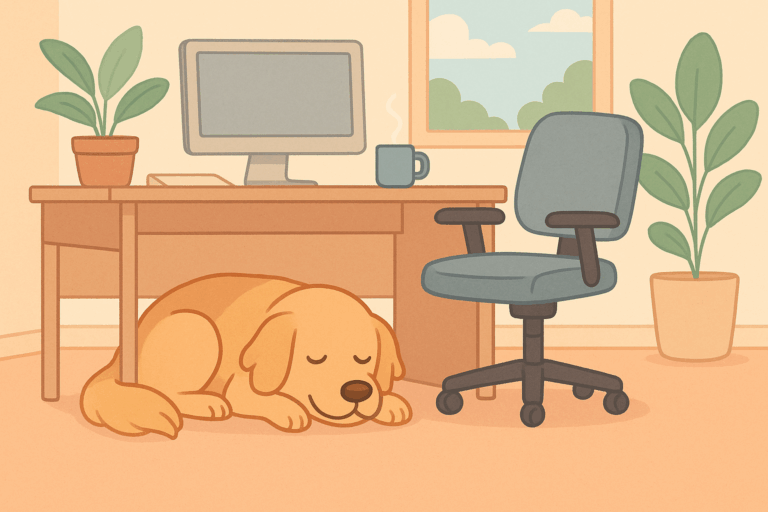
Paws for Thought: Why Your Office Needs a Four-Legged Wellbeing Strategy
Last month, I watched a senior finance director have what can only be described as a complete meltdown over a quarterly report. Shouting, red-faced, the works. Then someone’s impossibly cute Pomeranian wandered into the meeting room. Within thirty seconds, this same executive was on the floor, belly-rubbing a dog and (almost) laughing about missed deadlines.
Magic? No. Just the power of a wagging tail in a stressful workplace.
Pets in offices aren’t just Instagram-worthy content. They’re stress-busters with four legs and zero interest in your performance review. Research shows that simply stroking a dog reduces cortisol levels faster than most mindfulness apps. Plus, they force conversations between colleagues who might otherwise never speak. I’ve seen marketing teams bond over comparing their dogs’ weird sleeping positions, creating connections that actually improved project collaboration.
My five-year-old nephew explained to me recently why his hamster makes him feel better when he’s upset: “He doesn’t ask questions, he just sits with me.” Kids understand something we adults complicate. Sometimes support doesn’t need words or solutions. Sometimes it just needs presence.
The productivity benefits surprise most leaders. Employees with office pets take shorter lunch breaks because they’re not rushing home to walk the dog. They stay later for meetings because Rover’s already there. One client told me their staff turnover dropped by 30% after introducing their pet-friendly policy. People don’t just work there anymore, they belong there.
However, before you start browsing rescue websites, consider the practicalities. Allergies aren’t just sniffly inconveniences for some people, they’re genuine health concerns. I worked with a company where three employees couldn’t function in the same building as cats. The solution? Designated pet-free zones and excellent air filtration. Simple adjustments that respected everyone’s needs.
Insurance matters too. One enthusiastic spaniel I encountered had expensive taste in office furniture. Legal liability, cleaning protocols, vaccination requirements, these aren’t fun conversations, but they’re necessary ones. Think of it like childproofing, but for creatures who might decide your important documents look particularly chewy today.
The biggest consideration? Not every animal suits office life. That client’s parrot who learned to mimic the fire alarm caused three evacuations in one week. Brilliant entertainment, terrible for productivity.
Start small. Trial periods work brilliantly. Maybe Fridays only, or one department first. Watch how people respond. Some employees will blossom around animals, others might feel anxious. Both reactions are completely valid.
Office pets won’t solve every workplace challenge, but they create something remarkable: spontaneous joy. When did you last see genuine laughter in a Monday morning meeting? When someone’s terrier decided the CEO’s shoelaces needed immediate attention, that’s when.
Creating pet-friendly workplaces isn’t about following trends. It’s about recognising that wellbeing comes in many forms, some with wet noses and unconditional enthusiasm for everyone they meet.
Sometimes the best workplace wellness initiative has been looking at you (and your sandwich) all along.